
Selling AI-assisted game content through a marketplace sounds like a straightforward revenue stream until a studio asks the question that actually matters: what, specifically, does the buyer own once they’ve paid for it? The legal answer in 2026 is more unsettled — and more consequential — than most marketplace listings let on.
The Copyright Floor Every Studio Needs to Know
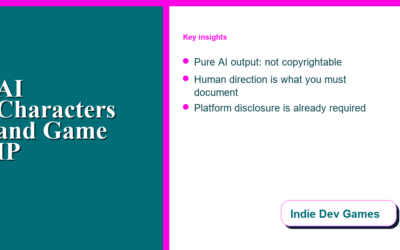
Under current U.S. law, confirmed by the Supreme Court declining to review the question in March 2026, fully AI-generated content with no meaningful human creative direction cannot be copyrighted. If a marketplace asset was generated with minimal human input, the studio selling it likely doesn’t hold exclusive rights to it — and neither does the buyer, no matter what the listing implies about ownership.
Why This Matters More for Marketplace Sellers Than Solo Developers
A studio using AI-assisted content internally can absorb some ambiguity about copyright status. A studio selling that content to third parties on a marketplace is making an implicit ownership claim to every buyer, and if that claim doesn’t hold up, the studio — not the AI vendor — is the one a buyer will come after when a competitor legally reuses assets the buyer thought they’d purchased exclusively.
What Platform Rules Actually Require Now
Major distribution and engine platforms have tightened their AI-content rules specifically around content players actually encounter, distinct from AI used purely as an internal development efficiency tool. A studio listing AI-assisted content on a marketplace needs to check the current disclosure requirements for that specific platform — these rules changed meaningfully in early 2026, and a studio operating off last year’s understanding of the requirements is operating on stale information.
Vendor Terms Don’t Automatically Solve This
Some AI tool vendors grant broad commercial rights to generated outputs “to the fullest extent possible under applicable law” — but that language cannot manufacture copyright protection where none exists under the law itself. A generous-sounding vendor license is not the same thing as enforceable exclusive ownership, and studios need to understand that distinction before representing content as exclusively owned in a marketplace listing.
What to Document Before Listing Anything
- How much human creative direction went into each asset? This is the single fact that determines whether copyright protection is even possible.
- What does the specific AI vendor’s contract actually grant, versus imply? Read the commercial-use clause directly, not the marketing page.
- What does the marketplace listing actually promise the buyer? Overpromising exclusivity the studio can’t legally guarantee is the liability, not the AI-assisted production method itself.
Tools that support genuine, documented human creative direction throughout the content-building process — not single-prompt generation — leave a studio in a meaningfully stronger position on this exact question. Charigent’s Marketplace feature reflects that kind of iterative, human-directed creation model.
The Bottom Line
AI-assisted content is a legitimate part of a modern game studio’s pipeline — the mistake is selling it through a marketplace with an ownership claim the underlying copyright law can’t actually back up.

0 Comments